
Kayak fleet
Put a coloured kayak at Echo Launch. Each player keeps the matching paddle token beside their task hand.

Zandoremi introduces Canyon Circuit: a fictional tabletop journey where a two-card hand gives every bend a purpose.
Slip beneath a sandstone arch, follow a flag to open water and decide which promise to keep. The best route begins with a plan small enough to change.
A flag can mean a catch, a milestone or a reason to turn around. Your task hand gives the same board a different story each round.
Place the reservoir in the middle, arrange the flags and explain the task limit before dealing the first offer.
Put a coloured kayak at Echo Launch. Each player keeps the matching paddle token beside their task hand.
Place flags at the Arch, the Narrows and the Sun Shelf. A visit counts only when the kayak ends a move there.
Deal three task cards face-up. Choose two to keep; return the third before anyone makes their first move.
Set the dial to a crosswind. It changes movement cost at exposed crossings, but never changes a task after it is completed.
The channels reconnect after every sandstone island. Choose a short crossing when the wind allows it, or a quiet edge when your tasks need time.
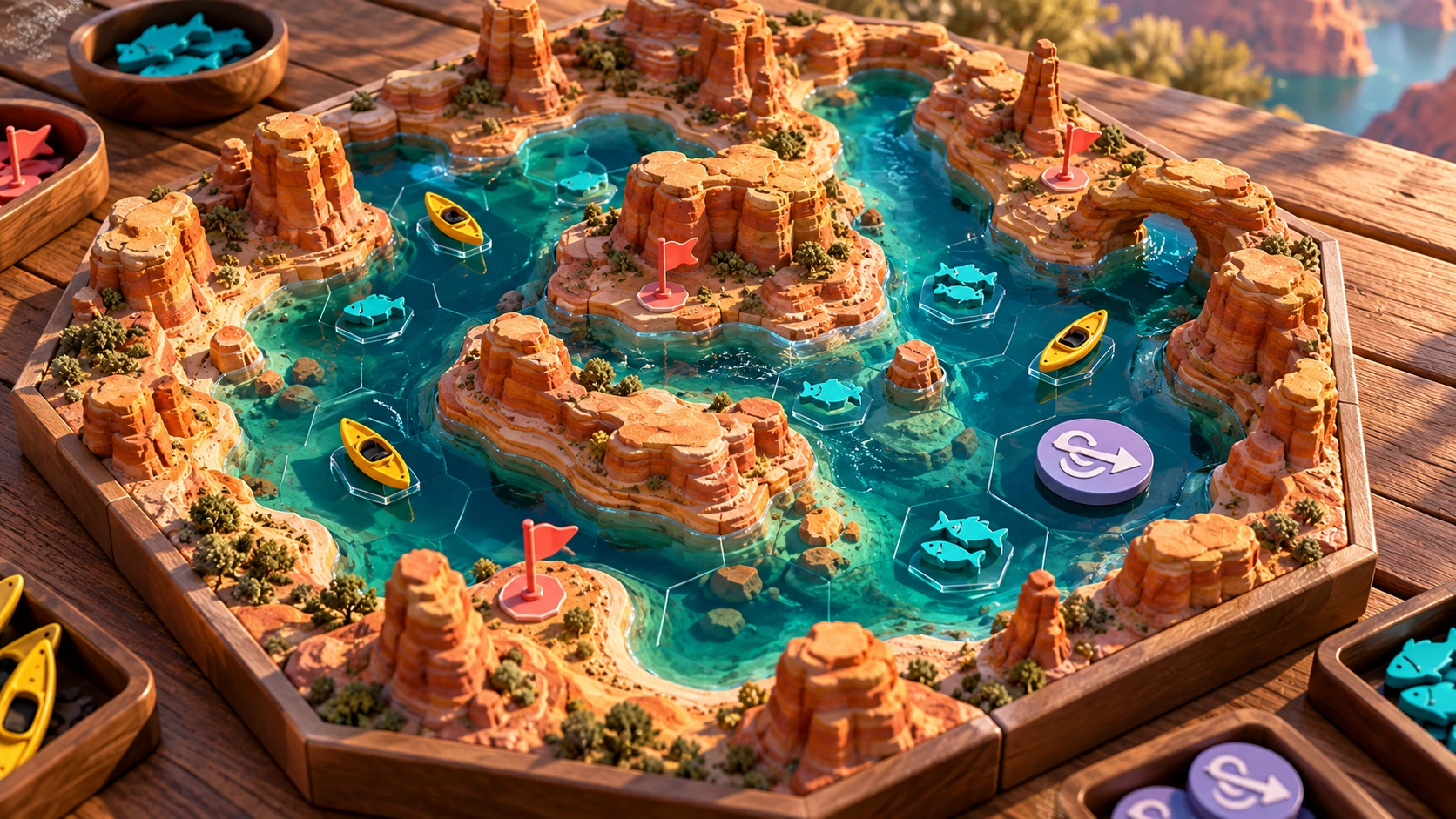
One turn adds a small piece to your plan. Explain the checkpoint before marking a task so the table can follow along.
Read both tasks and choose which one your next move will support.
Spend up to four paddle units. A narrow passage costs one; exposed water costs two.
Take the catch printed at the checkpoint, or exchange that cast for a tackle card.
Mark the visit on an active task. A single arrival may support both tasks if their words allow it.
Claim a completed task. You may replace one unfinished card after paying a paddle unit.
A planner, a reservoir catch and a shared tackle case supply three different reasons to adjust a route.

Bea can reserve one offered task until her next turn. The reserved card remains visible, so every paddler knows which route she is considering.
Skill · hold an offer
This catch waits at the Sun Shelf. It scores six circuit marks, and its copper symbol can complete a task that asks for two different catches.
Catch · 6 circuit marks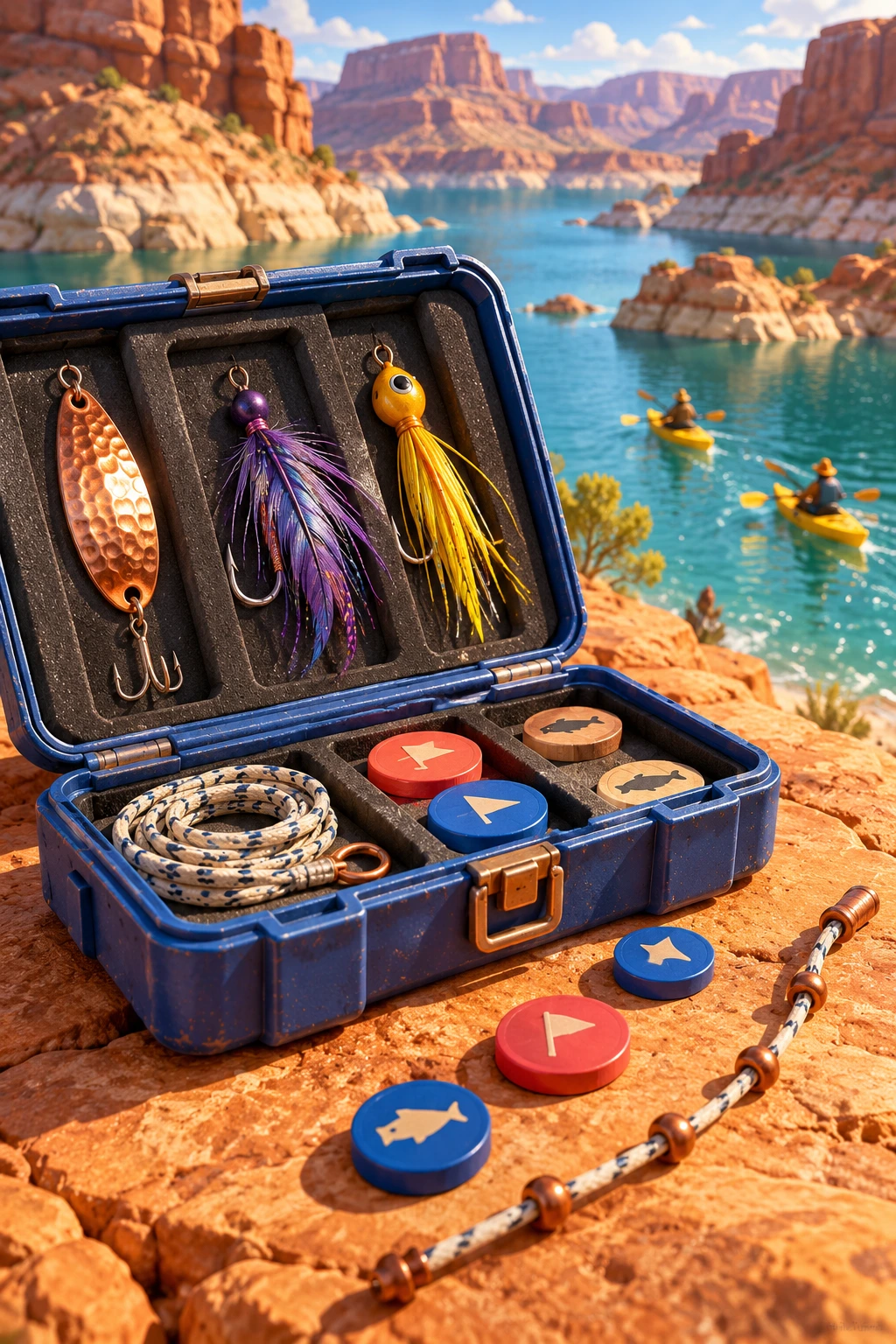
Keep a spoon, a fly and a jig in separate compartments. Tasks refer to their symbols; the illustration is a reminder, not a hidden rule.
Limit · two tackle cards
A task is a commitment to a sequence. A bonus is a brief exception that helps you keep it. Neither changes evidence already recorded.
Task cardsTrack progress openly and bank a card only when every condition is met.
Bonus cardsRead the timing aloud, resolve the effect once and return the card.
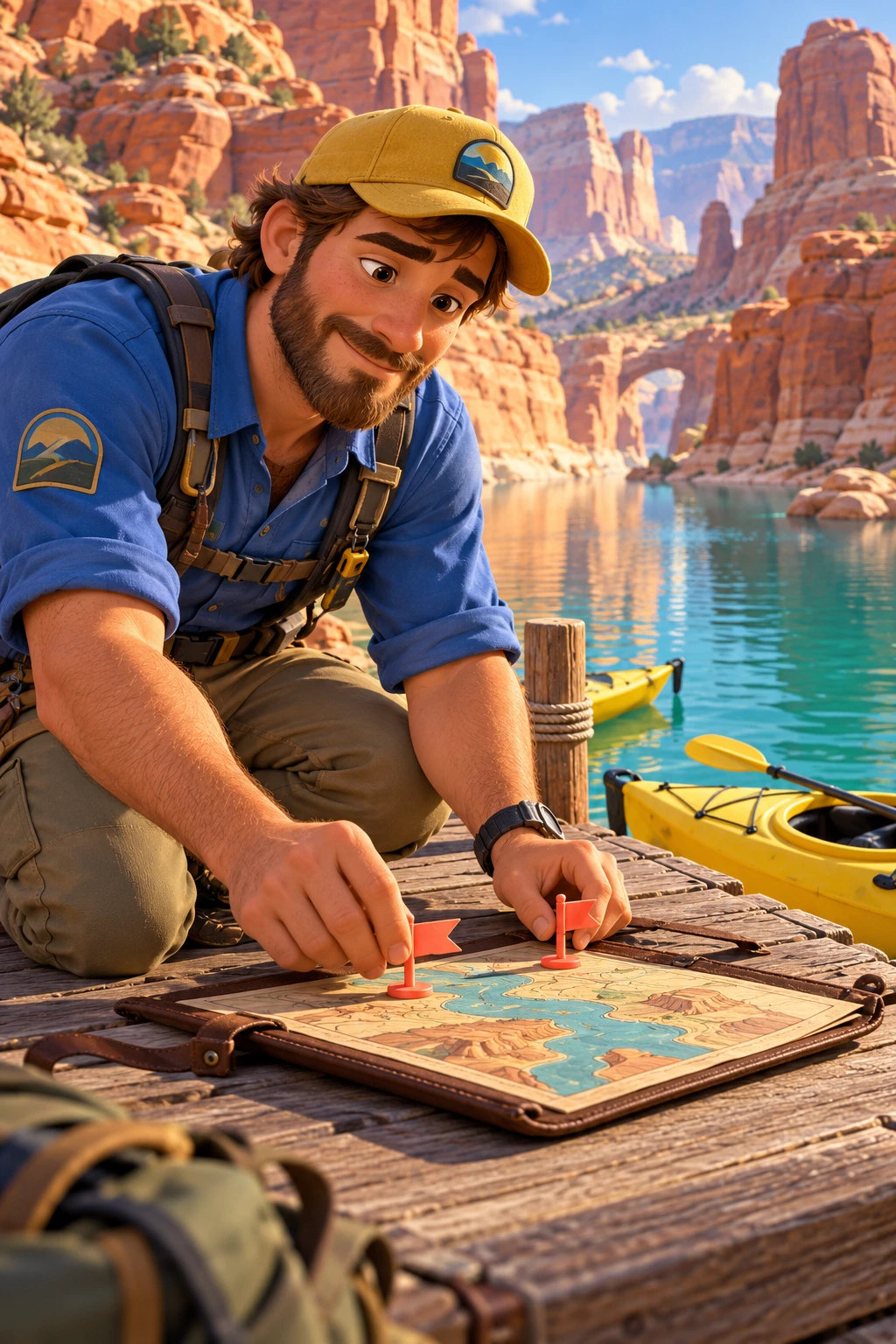

Collect a silver perch and a copper trout while this card is active. Old catches cannot be counted again.
Exchange a lure without spending the cast at your current checkpoint. Return the old card to the shared tray.
Visit the Narrows twice with another checkpoint between those visits. The route can be clockwise or anticlockwise.
Replace an unfinished task at the end of a turn without paying the usual paddle unit. Keep your other task.
Add up to two tasks, then record their progress. Finish a task to bank its marks and open a slot. Removing an unfinished task discards its progress.
Record two checkpoint visits. Worth 5 marks.
Record two different catch symbols. Worth 7 marks.
Record three sheltered-route visits. Worth 4 marks.

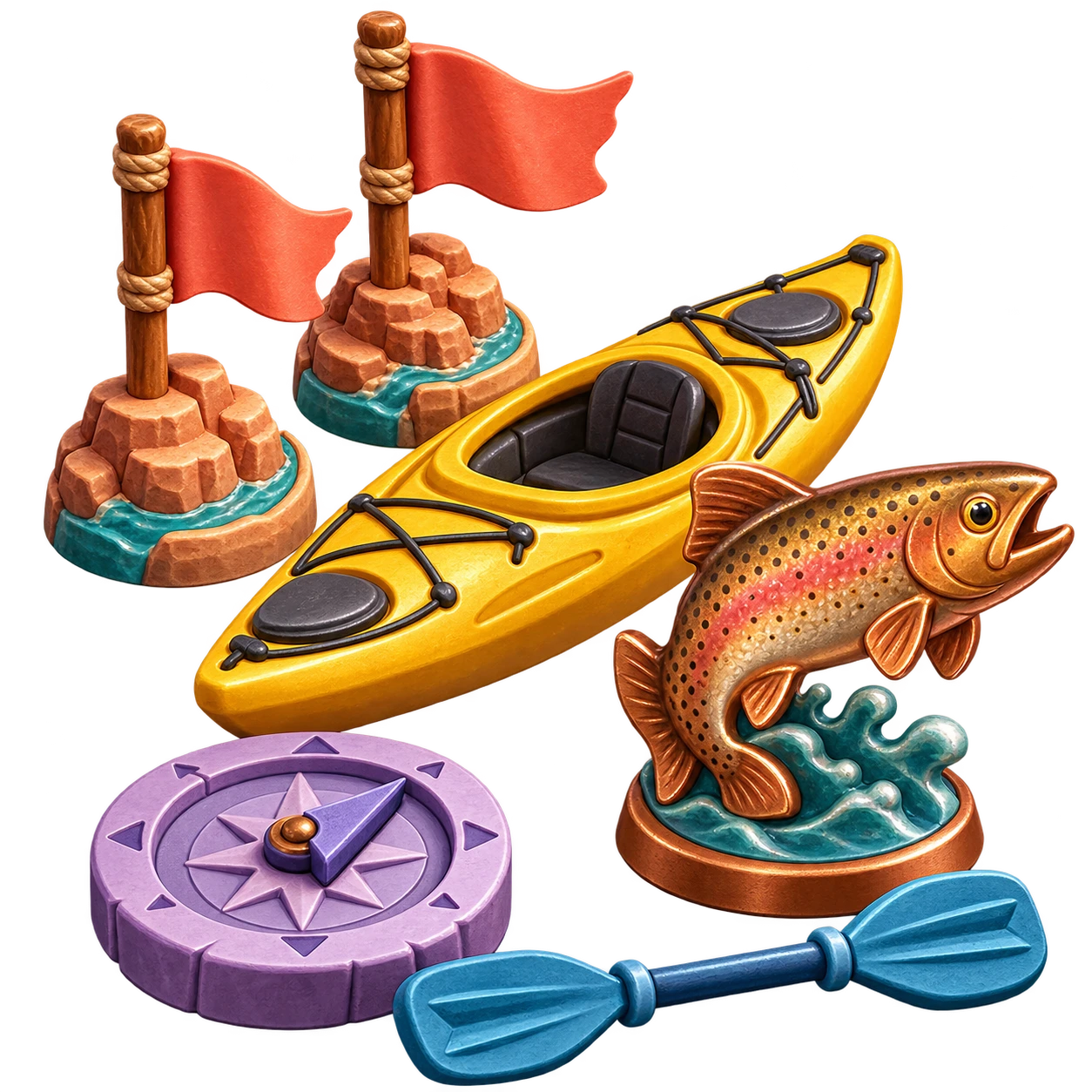
After the third round, rotate the wind dial. Exposed water now costs an extra paddle unit for the next round. Sheltered channels retain their printed cost.
A task already completed stays complete. If a new crossing would exceed your movement allowance, choose another route or stop at the nearer flag.
Only catches and finished tasks enter the ledger. Unfinished progress tells a story but adds no final marks.
| Entry | Evidence | Marks |
|---|---|---|
| Silver perch | Catch at the Arch | 3 |
| Copper trout | Catch at Sun Shelf | 6 |
| Flag survey | Arch, then Sun Shelf | 5 |
| Catch journal | Two different catches | 7 |

Try a task hand, trade an unfinished idea and see how an open slot changes the next choice.
Return to the task handThe task wording is public. Use these examples to settle the timing before a kayak leaves its flag.
It can when both tasks are active and both conditions are met. A task that says “then” also requires the printed order; an earlier visit cannot be added retrospectively.
Its progress is discarded. Completed tasks remain banked. The planner below models the two-card hand limit, so removing an active card also removes its rehearsal progress.
No. The canyon, people and routes are original fictional elements. Movement costs are game rules, not guidance for kayaking, weather or safe fishing.
Only until you reload or leave the page. There is no account, server score or saved collection. The optional browser notice preference is separate.